*Some food for thought and debate, posted here because not all stories can (or should) find a home on Daily Maverick’s editorial diary - and some writers (me) are prone to go on creative tangents that don’t always fully serve the central mission… I’m not bitter that@Neesa spiked this, I promise.
When last have you checked your HR manager’s job title? If you look now, you won’t find anything related to “human” or “resources” but maybe “talent” and “people” facilitation. The vernacular of work culture has changed, but the Venn diagram of productivity and personal life is converging.
Unlike Jack Harlow, Praelexis and the legion of Stellenbosch tech startups don’t identify as vanilla (baby). Instead, Capitec’s chosen AI partner refers to itself as teal. These companies say that the stuffy old HR practices choke staff when modern work volumes are a killer (baby).
So they’re casting off the whips and chains to unleash productivity.
At 13 years in the game, Praelexis may not be a startup anymore, but organisationally it’s still a baby. And, as such, it draws from the well of modern best practise of AGILE and flat hierarchies that also sees it fall into the well-established trap of letting new hires or juniors take up leadership roles on projects (sprints), but then don’t compensate them for additional stress burdens.
When I asked the compensation question, the *insert trendy HR manager title here* answers with a quick “that’s a fascinating question” keen readers will know that this is shorthand for the interviewee not having prepared for that question.
To be fair, I don’t think they budgeted for a Daily Maverick journalist to join the Happy Sandpit field trip – where they take HR professionals from across the country to experience other company cultures – and have feelings about workplace organisation.
But here we are, with an incredible view of the Stellenbosch Mountain, in a boardroom called the Piano Room – because of course it is, there’s a grand piano.
Valley mentality
Praelexis is what happens when Stellenbosch’s academic culture and startup idealism get married and raise an AI company together. The company was spun out of university research, and its founders still talk about “rigour” and “data ethics” the way most execs talk about margins and market share.
Capitec owns a third of it, but with zero control –but they benefit from the machine learning brain trust.
Read more: AI helps SA banks to include informal economy
And, crucially, the company’s proprietary toolkit, Praexia, that runs the credit models that help the bank decide who gets a loan. But more than the tech, what’s interesting here is how the company is organised.
Praelexis identifies as “teal” in its interpretation of the next evolutionary stage in how humans arrange themselves for work.
Frederic Laloux, the Belgian thinker who coined the term, describes Teal organisations as living organisms rather than machines.
They move through three main principles: self-management, wholeness, and evolutionary purpose. It’s not about climbing ladders; it’s about adapting to the terrain.
Founding philosophy
CEO, Dr McElory Hoffmann, doesn’t like to think of people working for him. “I work with people,” I’m told by the customer facing commercial head he once said, “together with people.”
You won’t find managers or formal titles here; the person architecting a system one month might be leading a project sprint the next. It sounds liberating – until you realise that without titles, there’s no clear ladder to climb.
One of the engineers (who is fresh out of varsity) told me, “You don’t get a promotion here. You don’t become a manager. What does growth even look like?” It’s the question haunting every flat organisation. When everyone’s empowered, nobody’s promoted. And for the ambitious, that feels less like freedom and more like stasis.
To maintain order in the absence of hierarchy, Praelexis relies on what it calls “organisational rhythms,” the pulse of AGILE sprints, retrospectives, and feedback loops.
What this means for you:
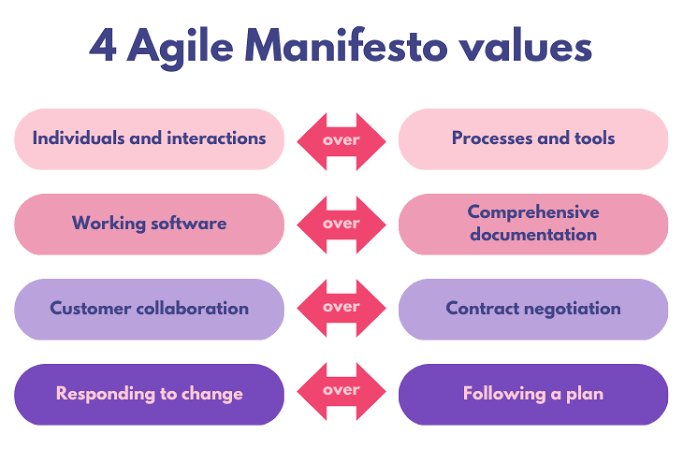
The migration toward AGILE and “colour-based” organisational philosophies like Teal reflects a deeper shift in how companies, especially in tech, see their people. These models promise to replace hierarchy with autonomy, titles with trust, and control with collaboration.
The upside: flexibility. Startups structured this way can respond faster to change, scale decisions without bureaucracy, and often report stronger team cohesion. Employees are empowered to take initiative, and companies like Praelexis can maintain a sense of shared ownership even as they grow.
The downside: complexity. Without traditional hierarchies, accountability and compensation become harder to define. Ambitious employees can feel lost without visible career paths, and “distributed leadership” can slip into quiet overwork if not managed carefully. The rhetoric of empowerment can mask a lack of structure or reward.
In practice, Teal and AGILE aren’t replacements for good management; they’re frameworks for rethinking it. South African tech firms adopting these models need to balance cultural ideals with clear growth pathways, fair pay, and transparent decision-making. Otherwise, “flat” risks becoming code for “confusing.”
Every two weeks, teams reassess what’s working and what’s not. Wednesdays are for brown-bag lunches; Fridays are for the soul.
There’s even a Zen room where staff are encouraged to “take a break into rest.”
It’s all very human-centred, until the human wants to leave. When an employee told management they wanted a “CTO” title, the response was simple: then our culture isn’t working for you anymore.
And that’s the thing about these teal structures: they promise autonomy but can feel like a closed system. The organism protects itself by shedding the cells that want to become something else.
Finding humanity in machine learning
Across South Africa’s tech landscape, you can feel the same current. Startups are desperate to escape the bureaucracy that suffocates innovation.
AGILE offers movement; Teal offers meaning. But there’s a fine line between distributing power and distributing accountability without reward. When I hear “we don’t do hierarchy,” I now also hear “we don’t do career progression.”
Maybe that’s the trade-off of the new world of work. In the Orange age, you climbed ladders.
In Teal, you just keep swimming. Praelexis has built an organism that breathes collaboration and trust, but the question remains whether it can keep its brightest minds when the glow of idealism fades.
The talent manager asked me to “focus on a central message and write it down, or tell someone” in a music-led meditation before we leave the Piano Room. I catch another glimpse of the mountains. The view was stunning, but I couldn’t shake the feeling that Teal might just be another shade of corporate paint; different hue, same old wall.